Comparisons
Since it is not easy to understand what the emissions figures for a holiday mean in a wider context, we have chosen to describe one consequence for the climate globally (ice sheet melting in the Arctic) and to compare these figures with an everyday source of emissions (average commute by car).
ICE MELT
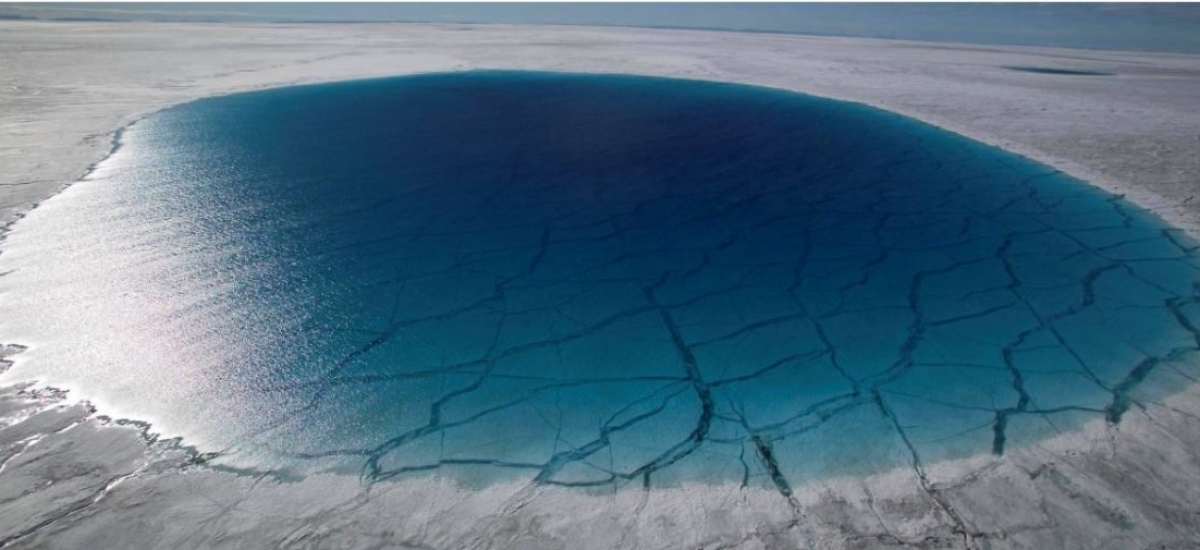
The Arctic ice is melting fast because of climate change, and the whole of the Arctic Ocean risks being completely ice free during summers in the future. Researchers have presented analyses of how carbon dioxide emissions affect ice melting in the well known scientific journal Science. The studies are based on measurements of the volume of the ice in September each year and the corresponding carbon dioxide concentrations . In this way it can be calculated that every tonne of carbon dioxide emissions reduces the area of the ice by 3 m² (± 0.3 m2). Source: D. Notz and J. Stroeve (2016) Observed Arctic sea-ice loss directly follows anthropogenic CO2 emission, Science Magazine.
COMMUTING
On average, commuting to work means about 10,000 km of driving each year, or just under 50 km per day (Transport Analysis, 2017b). If this commute is undertaken alone in a medium-sized diesel car, it causes approximately 1370 kg CO2 emissions.